Bibimbap
Bibimbap — the word means simply 'mixed rice' — is one of the most direct expressions of Korean cooking philosophy: components prepared separately, each cooked or seasoned to bring out its own character, unified only at the moment of eating. The dish evolved in the Joseon royal court, where elaborate table service required every namul (seasoned vegetable) to be prepared individually. Gochujang, the fermented chili paste that acts as the dressing, carries the dish — made from sun-dried chili powder, fermented soybean paste, and sweet rice, it has a depth no fresh sauce can match. Dolsot bibimbap, served in a scorching stone pot, crisps the bottom rice into a golden crust, the Korean equivalent of the socarrat. You mix everything together vigorously before eating: not optional, that is the meal.
Mix before eating
Stirring everything together vigorously is the point — each component was cooked separately precisely so the flavours merge at the last second
Gochujang is the key
Fermented chili paste — aged weeks or months — provides umami depth that fresh sauce cannot match; it ties every bowl together
Each namul separately
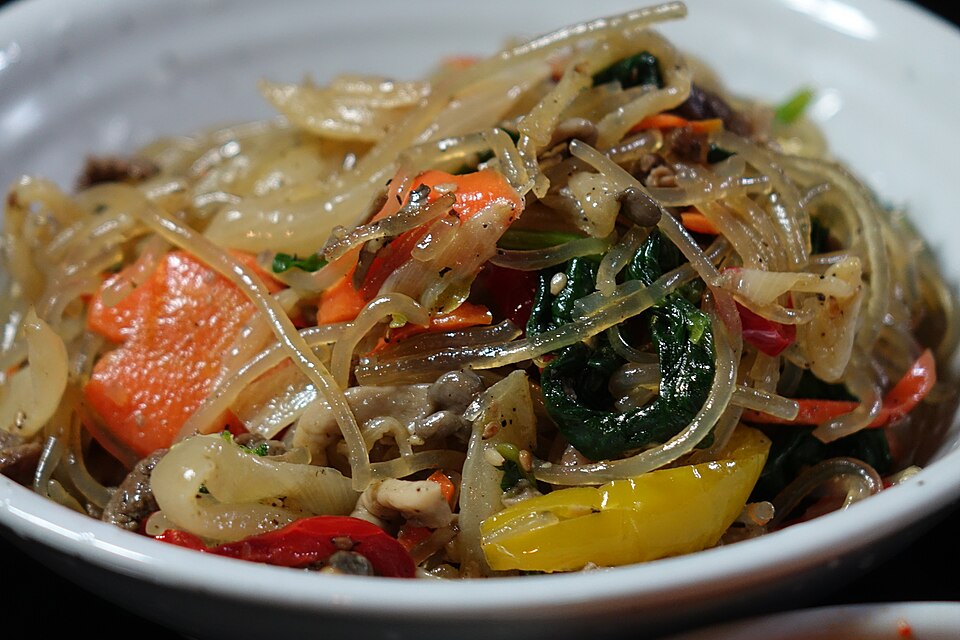
Every vegetable is seasoned and cooked individually before assembly — this creates the contrast of textures and flavours that defines the bowl
Dolsot — stone pot
Served in a scorching stone bowl, the bottom layer of rice crisps against the hot surface, creating Korea's answer to the socarrat
Ingredients 4 servings
- 2 cups short-grain white rice
- 200g beef sirloin, thinly sliced against the grain
- 1 medium courgette, julienned
- 1 medium carrot, julienned
- 200g baby spinach
- 100g bean sprouts
- 4 shiitake mushrooms, stems removed
- 4 eggs
- 4 tbsp gochujang (Korean chili paste)
- 3 tbsp sesame oil
- 2 tbsp soy sauce
- 1 tsp sugar
- 3 cloves garlic, minced
- Sesame seeds to garnish
How to make it
- 1Cook rice in 2.5 cups water: bring to a boil, cover and simmer on the lowest heat for 12 minutes, then rest off the heat for 10 minutes.
- 2Marinate beef with 1 tbsp soy sauce, 1 tbsp sesame oil, 1 tsp sugar and half the garlic for 15 minutes.
- 3Blanch spinach 30 seconds in boiling salted water, squeeze dry, season with 1 tsp sesame oil and salt; sauté bean sprouts 2 minutes with garlic and salt; stir-fry carrot and courgette separately for 2 minutes each with a drizzle of sesame oil.
- 4Sear marinated beef over high heat 3–4 minutes until caramelised; slice shiitake and sauté 2 minutes with a splash of soy sauce; fry eggs sunny-side up in sesame oil.
- 5Divide rice among 4 bowls, arrange vegetables and beef in sections, place an egg in the centre, add 1 tbsp gochujang per bowl, drizzle with sesame oil and scatter sesame seeds — mix everything together before eating.
Nutritional info
per serving (~350 g)
Estimated nutritional values.
Pairs perfectly with