Fir Fir
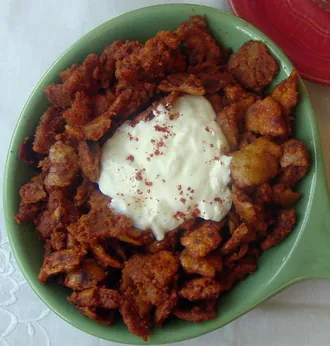
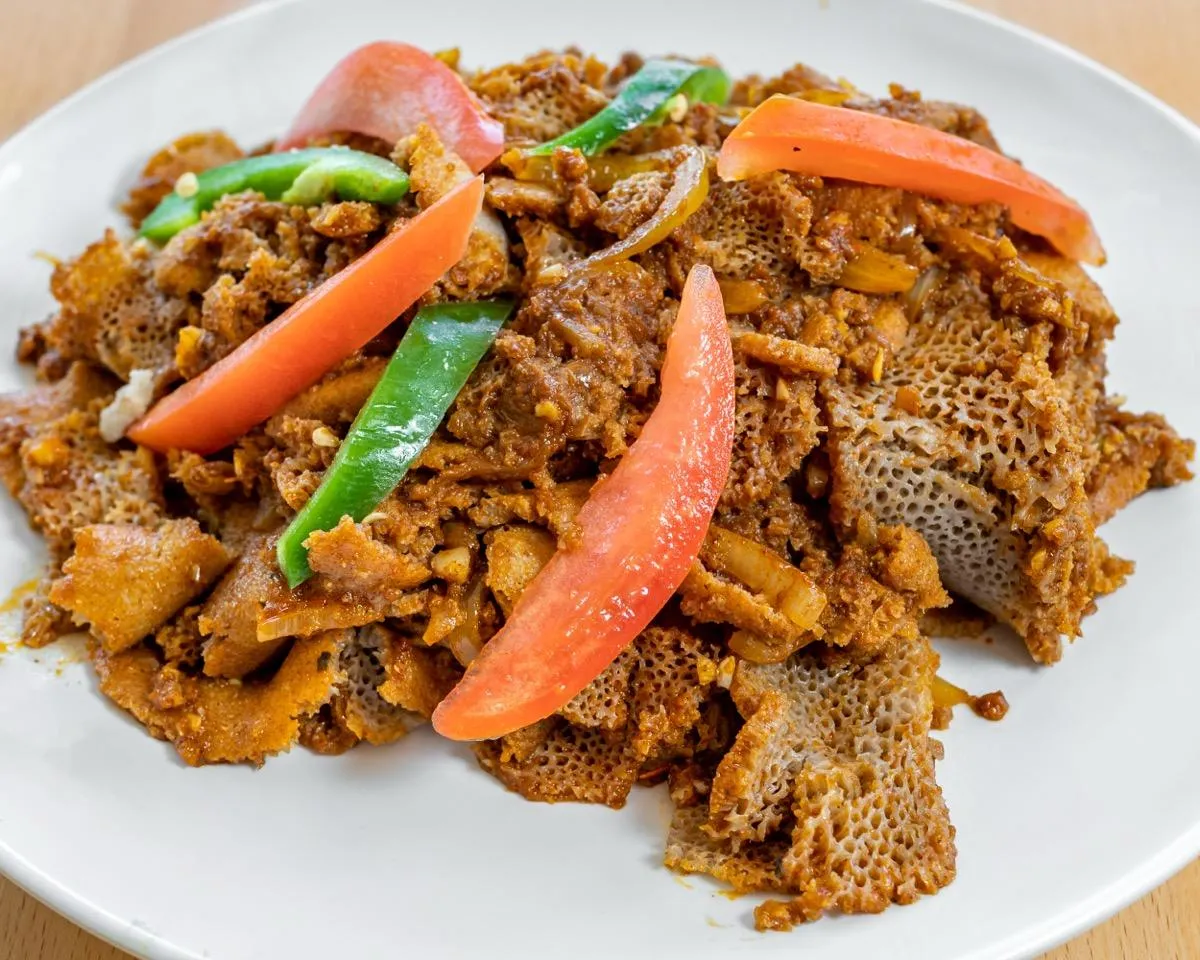
Fir Fir is the ultimate symbol of ingenuity in Ethiopian cuisine, a dish specifically designed to transform slightly dried injera from previous days into a new, flavorful meal without any trace of waste. The name derives from an Amharic verb describing the process of tearing or shredding, emphasizing the central gesture of the preparation. Although often considered an everyday breakfast, Fir Fir takes on special significance during the Ethiopian Orthodox fasting period, when the vegetarian version, without butter of animal origin, becomes the preferred meal of millions of believers. Family tradition dictates that the injera used should never be fresh — new injera tears too easily and absorbs the sauce unevenly, which is why many housewives intentionally keep a few leftover pieces specifically for this dish.
Leftover injera from previous days
Slightly dried injera, a few days old, is traditionally torn by hand into small pieces, a clever way to avoid wasting leftovers.
Spiced berbere sauce
A tomato sauce with berbere, onion, and garlic is prepared separately, thick and intense, forming the flavorful base the bread soaks into.
Niter kibbeh butter for finishing
A spoonful of spiced clarified butter is added at the end, giving the dish a rich, velvety note characteristic of Ethiopian cuisine.
Optional egg on top
A hard-boiled egg, cut into quarters, or a fried egg is often placed on top, turning Fir Fir into a hearty breakfast.
Ingredients 4 servings
- 6 pieces of injera, a few days old, torn
- 3 tomatoes, chopped
- 1 onion, chopped
- 2 tbsp berbere (Ethiopian spice blend)
- 3 garlic cloves, crushed
- 3 tbsp niter kibbeh (spiced clarified butter)
- Salt to taste
- 4 hard-boiled eggs (optional)
- 150 ml water
How to make it
- 1The slightly dried injera pieces are torn by hand into small, irregular strips, about three to four centimeters, and set aside.
- 2Niter kibbeh melts over medium heat in a large pot, and the chopped onion sautés in it until translucent.
- 3The crushed garlic is added over the onion, sautéing for just thirty seconds, enough to release its aroma without burning.
- 4Berbere is sprinkled over the mixture, stirring quickly over low heat to lightly toast its flavor, an essential technique for a deep taste, not just heat.
- 5The chopped tomatoes are added to the pot, cooking over medium heat for ten minutes, until a thick, dark-red sauce forms.
- 6Water is poured over the sauce to thin it slightly, and the mixture simmers an additional five minutes, adjusting salt to taste.
- 7The torn injera pieces are added to the hot sauce, stirring gently and constantly, so each piece soaks evenly without turning into mush.
- 8Fir Fir is taken off the heat as soon as the injera has absorbed most of the sauce, while still retaining a visible structure of pieces, and is served warm, with quarters of hard-boiled egg on top, if desired.
Nutritional info
per serving (~350 g)
Estimated nutritional values.
Pairs perfectly with