Dulet
Dulet is the go-to dish for using the offal left over after a slaughter, a classic example of the Ethiopian culinary philosophy of wasting no part of the animal. Hand-cutting with a knife, rather than mechanical grinding, is considered essential for preserving the correct texture — ground offal would become too soft and lose the individuality of each type of meat in the mix. In many Ethiopian families, Dulet frequently appears after major religious celebrations involving an animal sacrifice, such as Fasika (Orthodox Easter) or Eid al-Adha, when fresh offal is available in abundance and needs to be consumed quickly. The recipe varies significantly from kitchen to kitchen in the exact proportion of liver, tripe, and meat, with some families preferring a liver-heavier ratio for a more intense flavor, others balancing more toward muscle meat.
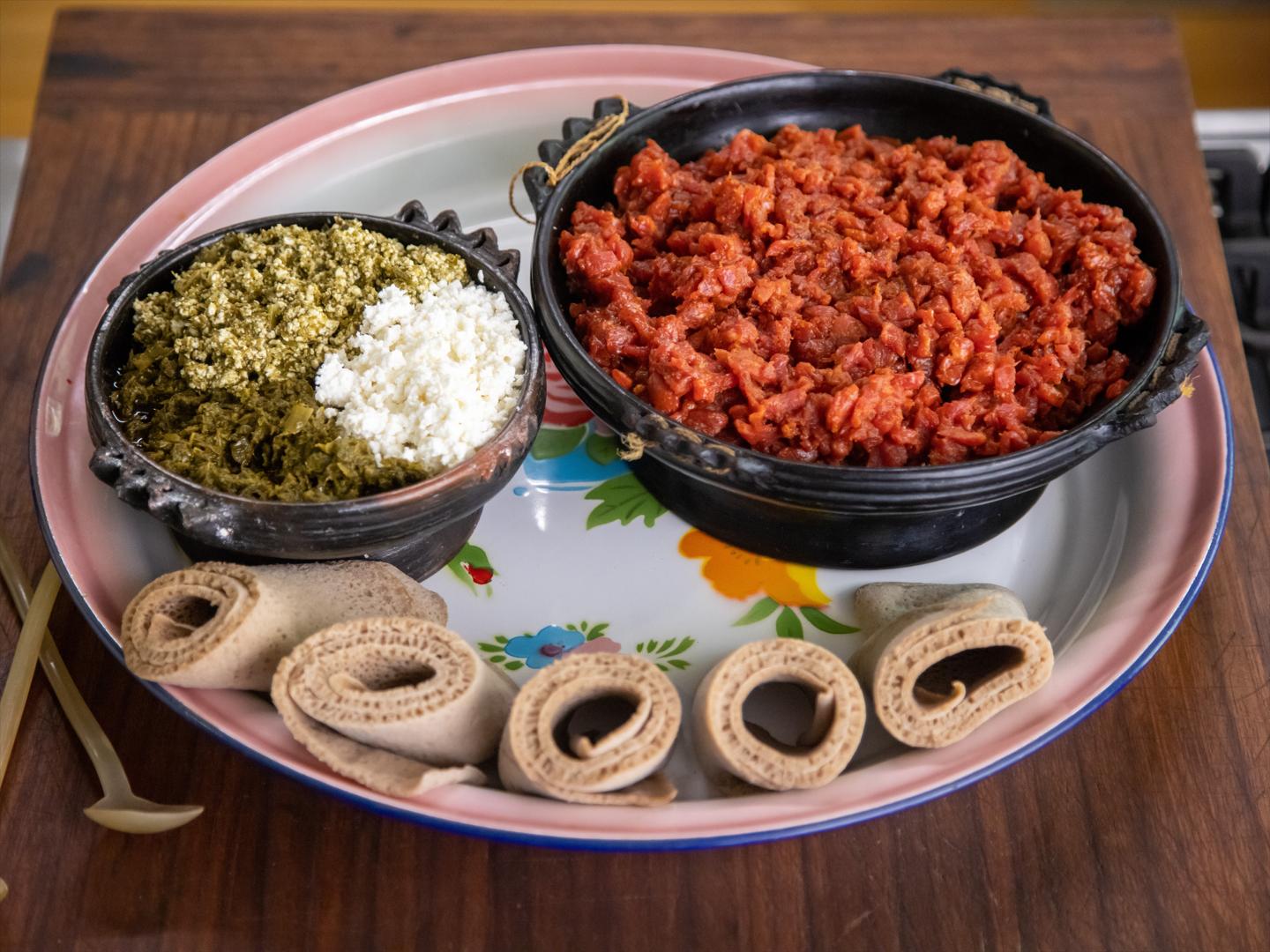
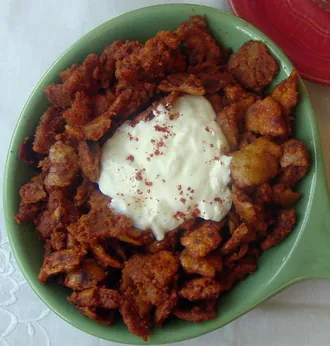
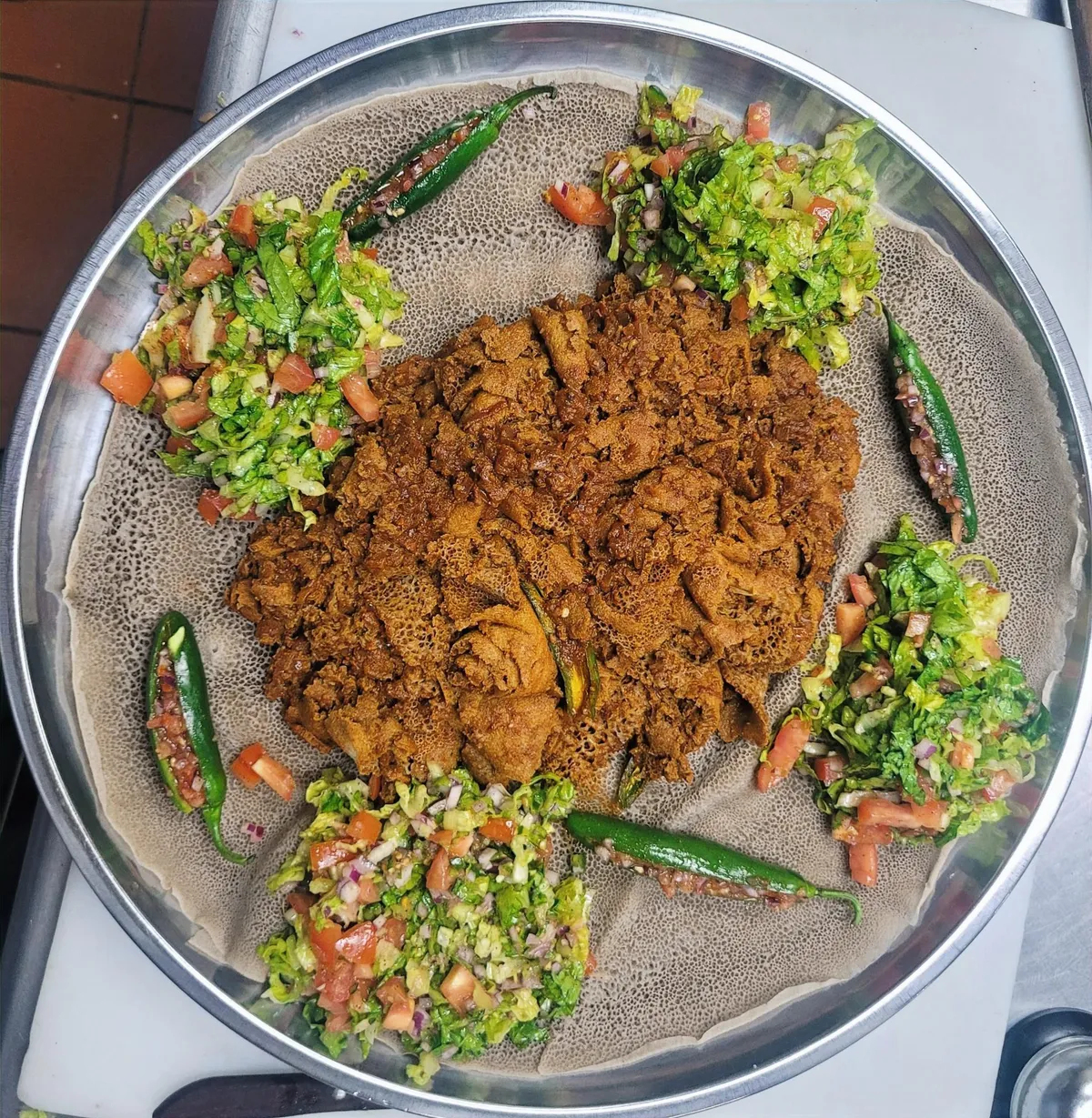
Finely knife-cut offal
Liver, tripe, and beef flesh are hand-cut with a knife into very small pieces, almost like a coarse mince, never ground.
Fresh green chilies
Finely chopped fresh green chilies mix directly into the minced mixture, giving a bright heat different from berbere's deeper warmth.
Generous niter kibbeh butter
A generous amount of spiced clarified butter is used to quickly cook the offal, preserving its tender, juicy texture.
Fine, almost pâté-like consistency
The final texture is finer and more uniform than other offal dishes, approaching a spreadable pâté, easy to serve on injera.
Ingredients 4 servings
- 300 g beef liver
- 200 g boiled beef tripe
- 200 g beef tenderloin
- 150 g niter kibbeh (spiced clarified butter)
- 4 green chilies, finely chopped
- 1 onion, finely chopped
- 3 garlic cloves, crushed
- 1 tsp grated ginger
- Salt to taste
How to make it
- 1The liver, boiled tripe, and beef tenderloin are each cut separately, with a very sharp knife, into very small pieces, almost minced, but never machine-ground.
- 2Niter kibbeh melts in a large pot over medium heat, until completely liquid and fragrant.
- 3The finely chopped onion sautés in the butter for a few minutes, until translucent, without browning too much.
- 4The crushed garlic and grated ginger are added over the onion, sautéing for just one minute, enough to release their aroma.
- 5The finely chopped green chilies are stirred into the pot, cooking for two minutes over medium heat to preserve their freshness and vibrant color.
- 6The finely cut offal and meat are all added at once, stirring constantly over medium-high heat to cook evenly but quickly.
- 7Cooking takes only seven to eight minutes, enough for the meat to no longer be raw but remain tender and juicy, without drying out.
- 8Salt is adjusted near the end, and Dulet is taken off the heat as soon as all pieces are evenly coated with the spiced butter.
- 9It's served hot, straight from the cooking pot, alongside fresh injera to be eaten by hand.
Nutritional info
per serving (~350 g)
Estimated nutritional values.
Pairs perfectly with