Panna Cotta
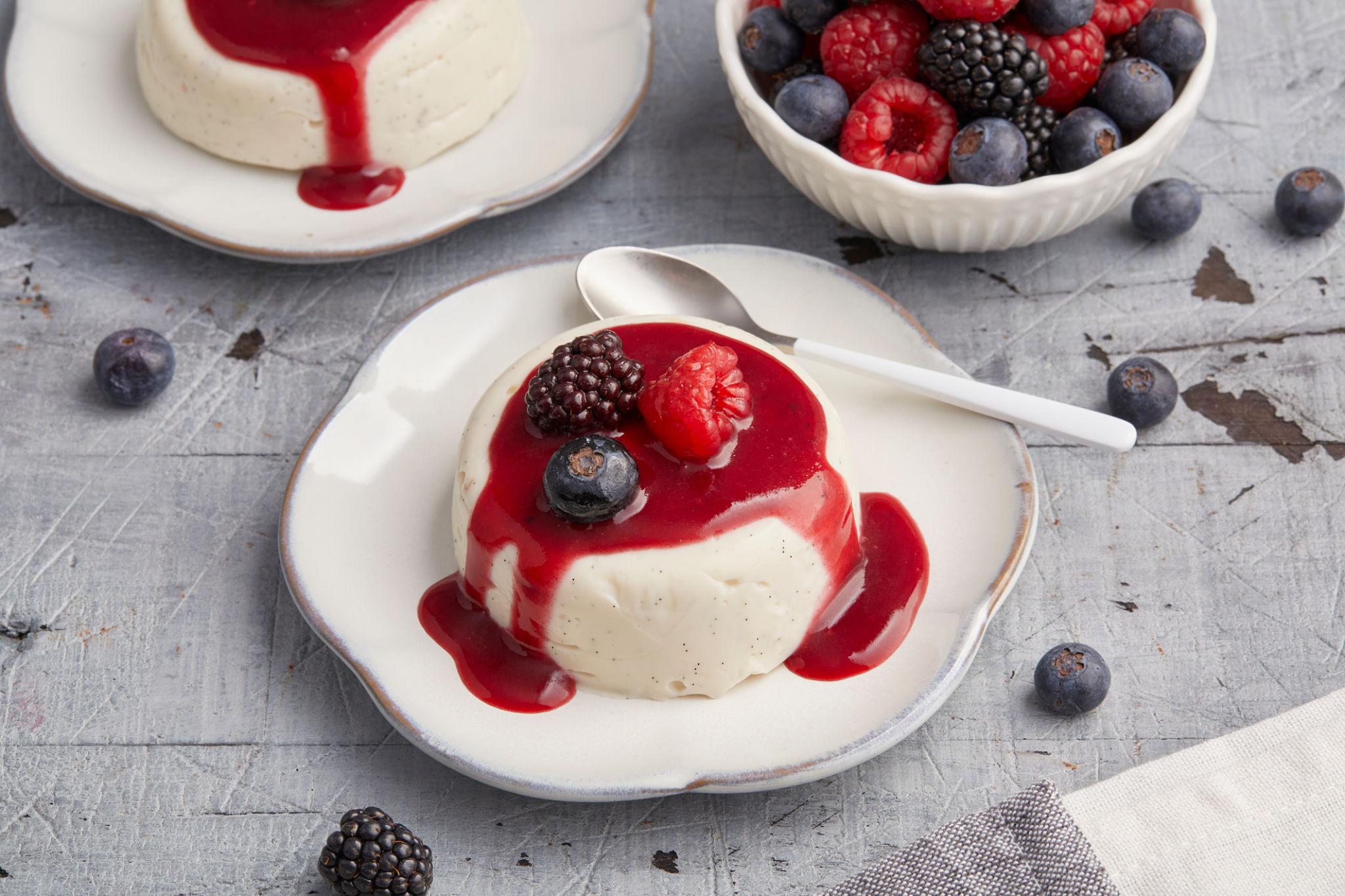
Panna cotta literally means 'cooked cream,' and the name actually describes the whole process: it isn't a baked custard like crème brûlée, but one set purely by gentle heat and a small amount of gelatin. The recipe originates in Piedmont, in northern Italy, a region known for its rich dairy, though stories of a Hungarian cook bringing it over in the 19th century remain historically unproven. What separates a successful panna cotta from a failed one is the gelatin balance: too much and the dessert turns rubbery, slices cleanly with a knife, and loses its characteristic wobble; too little and it won't hold its shape once unmoulded. Traditional recipes aim for the point where the dessert barely sets — enough to keep its shape once turned out onto a plate, yet fragile enough to melt almost instantly on the tongue.
Minimal gelatin
Just enough to set, not enough to turn rubbery
No boiling
Cream is heated only until just below a simmer
Cream-like texture
Should quiver and break under a spoon, not slice like custard
Unmoulded onto a plate
Or served straight in the glass, both are traditional
Ingredients 6 servings
- 500ml heavy cream (min. 30% fat)
- 100g sugar
- 1 vanilla pod (or 1 tsp extract)
- 7g powdered gelatin (or 4 sheets)
- 45ml cold water (for powdered gelatin)
- Berries or fruit coulis, to serve
How to make it
- 1BLOOM THE GELATIN: sprinkle the powdered gelatin over the cold water in a small bowl and let sit for 5-10 minutes until it hydrates into a spongy gel.
- 2HEAT THE CREAM: put the cream, sugar, and the seeds scraped from the vanilla pod (plus the empty pod) into a saucepan.
- 3Heat over medium, stirring, until just below boiling — do not let it boil.
- 4REMOVE FROM HEAT AND ADD GELATIN: discard the empty pod and stir the hydrated gelatin into the warm cream until fully dissolved.
- 5STRAIN: pass the mixture through a fine sieve into another container for a perfectly smooth texture.
- 6POUR INTO MOULDS: divide between 6 individual moulds or glasses.
- 7CHILL: refrigerate for at least 4 hours, ideally overnight, until fully set.
- 8SERVE: to unmould onto a plate, dip the base of the mould in warm water for a few seconds, then invert onto a plate.
- 9Top with berries or fruit sauce.
Nutritional info
per serving (~350 g)
Estimated nutritional values.
Pairs perfectly with