Beshbarmak
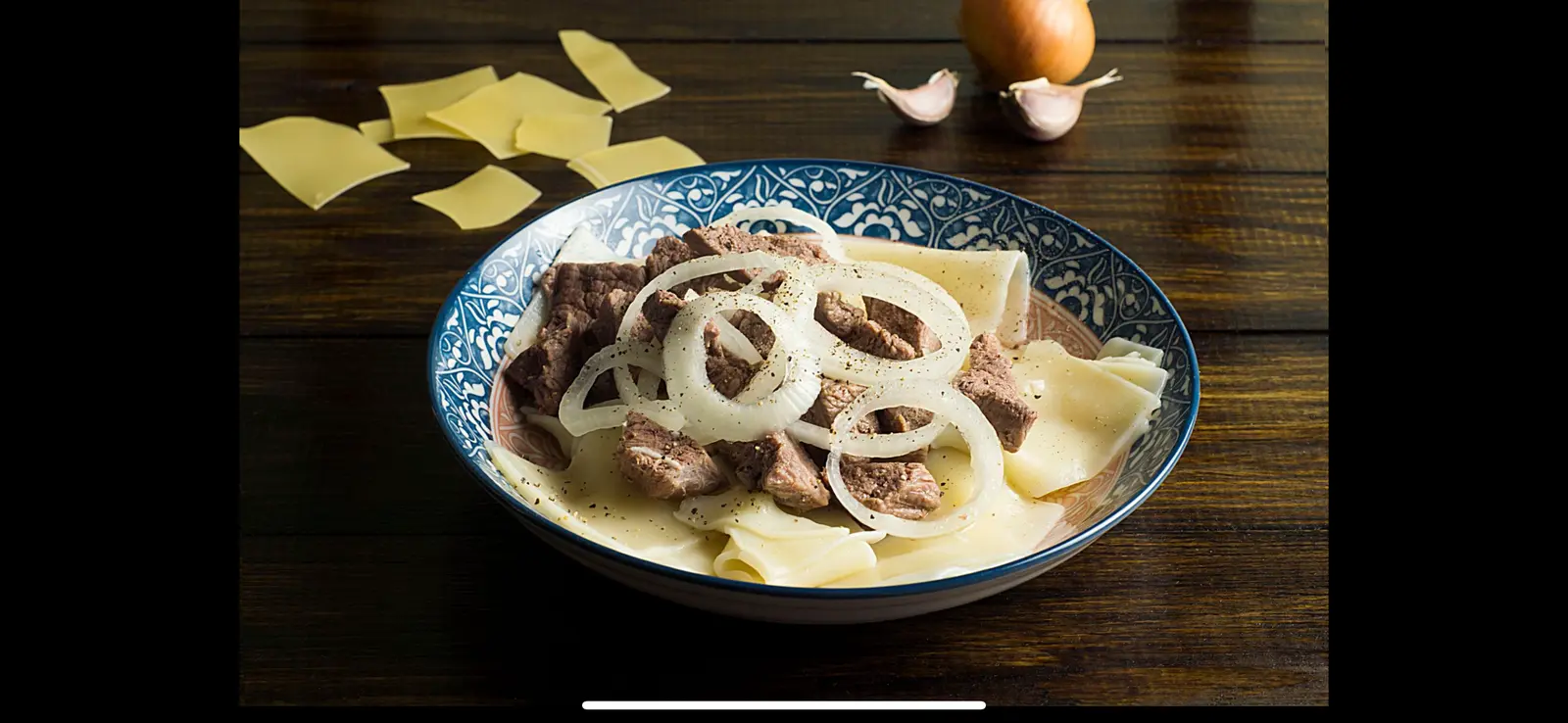
Beshbarmak — whose name means five fingers, reflecting the traditional way of eating it by hand — is the emblematic dish of Kyrgyzstan, Kazakhstan, and the wider Central Asian nomadic cultures. A whole lamb or horse is boiled for hours in salted water, and the concentrated broth is poured over wide, flat squares of dough cooked in the same broth. The dish is more than food: its preparation marks weddings, funerals, and family gatherings. The meat is served with onion bathed in warm broth, arranged on an enormous shared platter. The guest of honour receives the lamb's head.
Rich in protein
Filling and nutritious
Can be frozen
Great for meal prep
Slow simmered
Low and slow cooking
Traditional recipe
Authentic taste
Ingredients 4 servings
- 1.2 kg bone-in lamb shoulder or beef brisket (or a mix), cut into 4 large pieces
- 3 litres cold water
- 1 tbsp fine sea salt, plus more to taste
- 1 onion, halved (for the broth)
- 1 carrot, halved (for the broth)
- 2 bay leaves
- 10 whole black peppercorns
- 400 g plain (all-purpose) flour, plus extra for dusting
- 2 large eggs
- 150 ml warm water
- 1 tsp fine sea salt
- 2 large onions (about 350 g), halved and thinly sliced into half-moons
- 0.5 tsp freshly ground black pepper
- Pinch of sugar
- Fresh dill or parsley, roughly chopped
How to make it
- 1Place the meat in a large stockpot, cover with the cold water, and bring slowly to the boil over medium heat — slow heating draws maximum flavour into the broth; skim the grey foam carefully for the first 10 minutes until the surface runs clear.
- 2Add the 1 tbsp salt, halved onion, carrot, bay leaves, and peppercorns; reduce the heat to a bare simmer (the surface should barely move) and cook uncovered for 2–2.5 hours, until the meat is fork-tender and falling from the bone.
- 3While the meat simmers, make the dough; whisk the flour and 1 tsp salt in a wide bowl, make a well, and add the eggs and warm water; stir with a fork, then knead on a floured surface for 8–10 minutes until firm, smooth, and elastic; cover with cling film and rest at room temperature for 30 minutes.
- 4Divide the rested dough into 4 pieces; working with one piece at a time and keeping the rest covered, roll out as thinly as possible on a floured surface — about 1 mm thick; cut into rough 8 × 8 cm squares (or 10 × 5 cm diamonds); dust generously with flour and lay flat on a tray so they do not stick.
- 5Lift the meat out of the broth onto a board, cover loosely with foil, and rest; strain the broth into a clean pot through a fine sieve and discard the boiling vegetables; keep the broth at a gentle simmer.
- 6Ladle 500 ml of the hot broth into a separate small pot; add the thinly sliced onions and a pinch of sugar and simmer for 5–6 minutes — the onions should stay translucent and just tender, not collapsed; stir in 0.5 tsp black pepper.
- 7Bring the strained broth back to a vigorous boil; drop the dough squares in batches, stir gently to prevent sticking, and cook 3–4 minutes per batch until they float and are al dente; lift out with a slotted spoon onto a warmed serving platter.
- 8Slice the meat thickly against the grain and arrange over the noodles; spoon the onions and their broth liberally over the meat; scatter with chopped dill, then ladle a cup of the hot clear broth on the side for each diner to sip between bites; serve immediately while everything is steaming hot.
Nutritional info
per serving (~400 ml)
Estimated nutritional values.
Pairs perfectly with