Jjajangmyeon
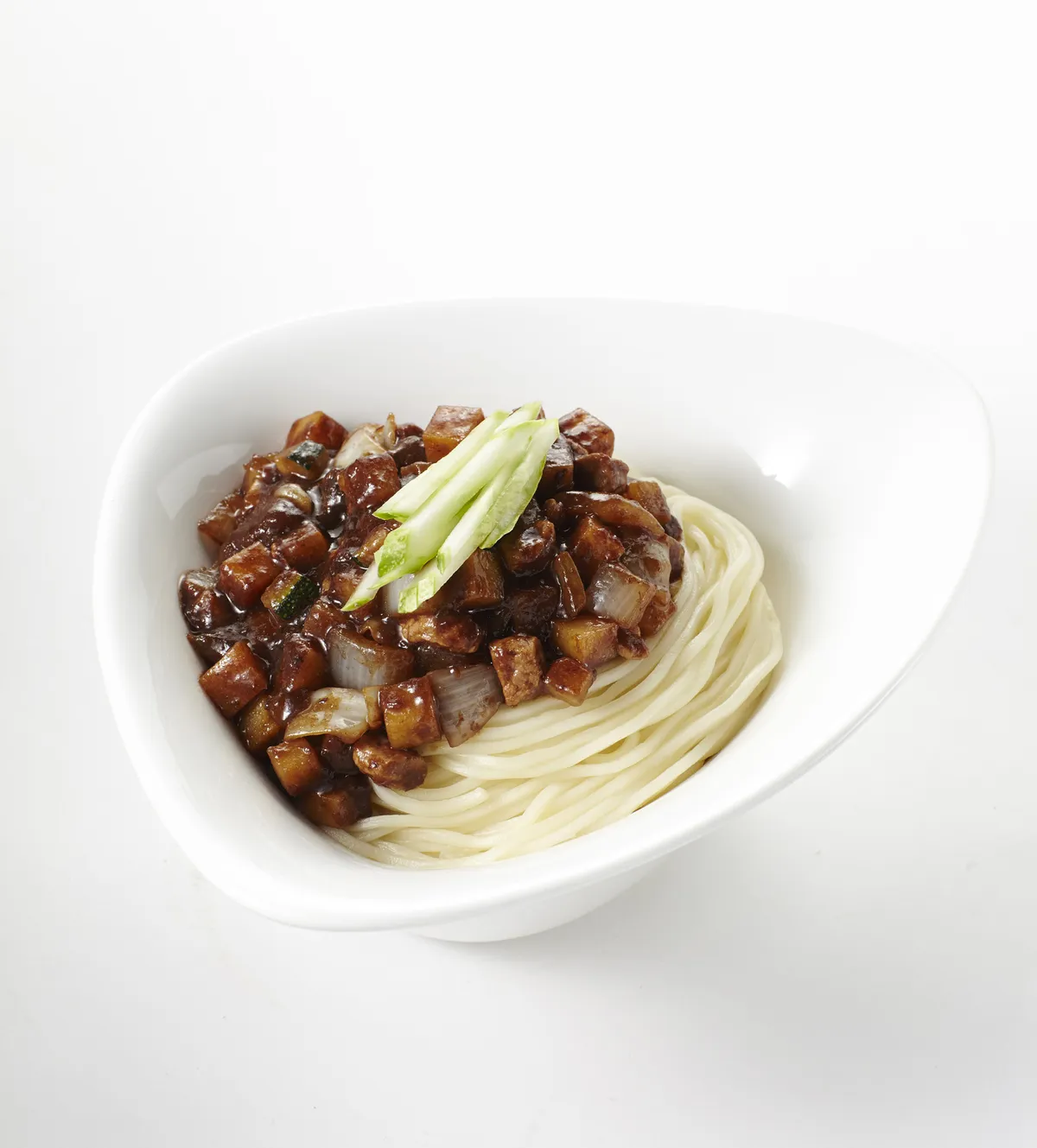
Jjajangmyeon was created by Chinese immigrants from the Shandong region who settled in the port of Incheon in the late 19th century, adapting a Chinese bean-paste noodle dish to locally available ingredients and tastes. Today the dish is considered fully Korean, quite different from the original Chinese zhajiangmian. Jjajangmyeon remains closely tied to life's transitional moments — traditionally ordered by families who have just moved into a new home, since cooking isn't yet possible, and Korean-Chinese restaurants deliver quickly anywhere in the city.
Fried black bean sauce
Black bean paste (chunjang) is fried in oil before use, which mellows its bitter edge into something sweeter.
Diced pork and vegetables
Pork, potato, zucchini, and onion are all cut into small, evenly sized cubes.
Thick, chewy noodles
Thick wheat noodles, slightly chewy, are used specifically because they hold the thick sauce well.
Korea's moving-day dish
Jjajangmyeon remains the go-to delivery order for moving day or other special occasions.
Ingredients 4 servings
- 500g thick wheat noodles
- 150g fried black bean paste (chunjang)
- 300g pork, cubed
- 1 potato, cubed
- 1 zucchini, cubed
- 1 large onion, cubed
- 3 tbsp oil
- 1 tbsp cornstarch
- Cucumber, thinly sliced, for garnish
How to make it
- 1Heat the oil in a wok and fry the black bean paste for a few minutes, until it develops a sweeter, deeper aroma.
- 2Remove the fried paste and set aside.
- 3Brown the pork in the same wok until coloured on all sides.
- 4Add the onion, potato, and zucchini, sautéing until they start to soften.
- 5Return the fried paste to the wok, add water, and let it simmer until the vegetables are tender.
- 6Mix the cornstarch with a little water and stir it into the sauce, mixing until it thickens nicely.
- 7Cook the noodles separately, drain, and pour the black sauce over them, serving with thinly sliced cucumber.
Nutritional info
per serving (~350 g)
Estimated nutritional values.
Pairs perfectly with