Pastéis de Nata
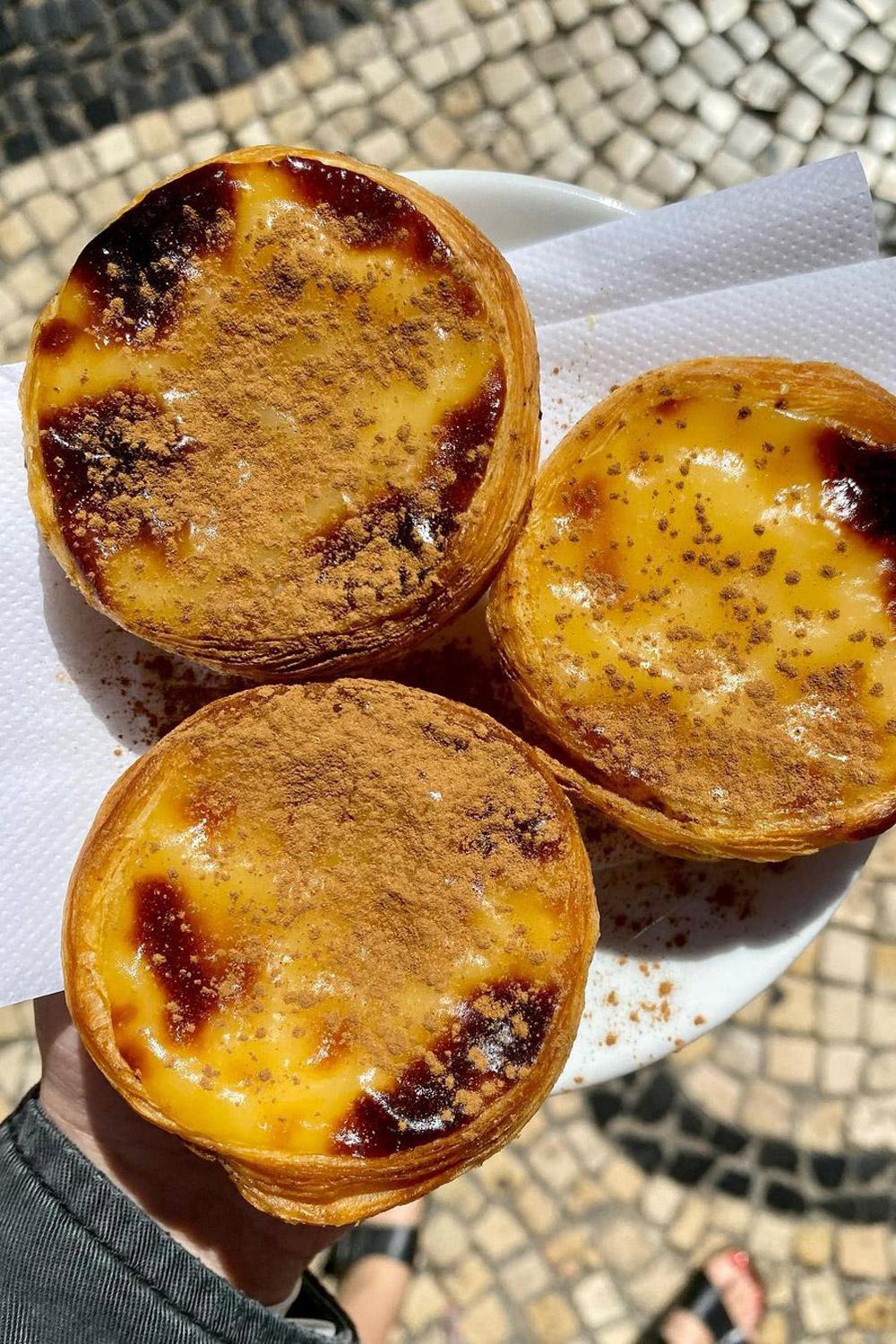
Pastéis de nata were created by the monks of the Jerónimos Monastery in Belém, Lisbon, well before the 19th century, as a way to use up egg yolks left over after the whites were used for starching the monks' habits and other clothing. The recipe was sold to a nearby sugar refinery after Portugal's monasteries closed in 1834, and in 1837 the Fábrica de Pastéis de Belém opened, which still keeps the original recipe secret today, known only to a handful of employees. The extremely high baking temperature, close to a home oven's maximum, is essential for the dessert's visual signature — the dark, charred spots on the custard's surface, which only appear when the custard browns quickly, before the thin pastry underneath burns. Preparing a sugar syrup boiled separately, then poured over the yolks, is a classic pastry technique — the thermal shock of the hot syrup partially cooks the yolks instantly, preventing the raw-egg taste that would result from a custard baked straight from cold mixed ingredients.
The puff pastry is rolled tightly into a log, then sliced, not flattened out from the start
Rolling creates the concentric layers visible in each baked tart shell, unlike a flat dough pressed directly into the mold
It bakes at extremely high temperature, close to maximum for a home oven
The intense heat lets the custard brown and get its characteristic charred spots before the pastry burns
The custard is made with a sugar syrup boiled separately, not just raw sugar stirred into milk
The hot syrup, poured over the egg yolks, partially cooks them from the first second, preventing a raw-egg-tasting custard
The tarts are served warm or at room temperature, never cold straight from the fridge
Cold firms up the butter in the pastry and makes the crust rubbery, instead of crisp
Ingredients 4 servings
- 1 sheet store-bought puff pastry, or homemade
- 250ml milk
- 1 cinnamon stick
- Peel of 1/2 lemon
- 150g sugar
- 75ml water
- 3 egg yolks
- 1 tsp vanilla extract
- 2 tbsp flour
- Powdered sugar and ground cinnamon, for serving
How to make it
- 1PREPARE THE PASTRY: roll the puff pastry tightly into a log, cut into 12 slices about 2cm thick, press each slice into a greased tart mold, forming a thin crust on the bottom and sides.
- 2INFUSE THE MILK: heat the milk with the cinnamon and lemon peel, let infuse 10 minutes, then strain.
- 3PREPARE THE SYRUP: boil the sugar with the water over medium heat, until the syrup reaches 105°C or forms a thin thread when dropped from a spoon.
- 4BEAT THE YOLKS: beat the egg yolks with the flour, gradually add the infused milk, then pour in the hot syrup, thinly, stirring continuously.
- 5COOK THE CUSTARD: cook the custard over low heat, stirring constantly, until slightly thickened, add the vanilla, strain.
- 6FILL AND BAKE: pour the custard into the pastry molds, filling to 3/4, bake at 250°C (or the oven's maximum), 12-15 minutes, until the custard browns with charred spots and the pastry is golden.
- 7SERVE: let cool slightly, serve warm or at room temperature, with ground cinnamon on top.
Nutritional info
per serving (~350 g)
Estimated nutritional values.
Pairs perfectly with