Piragi
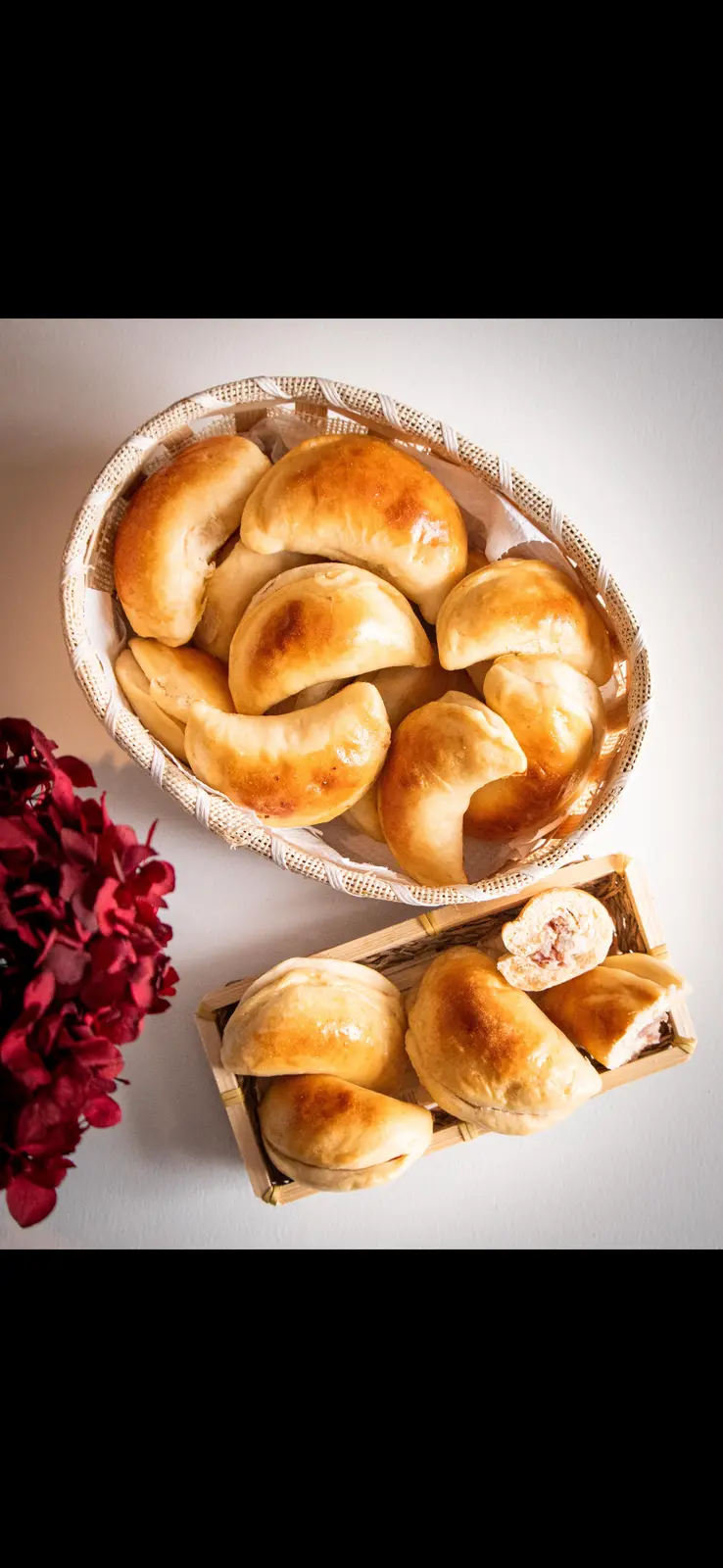
Piragi are small crescent-shaped buns filled with smoked bacon and finely chopped onion, baked in leavened dough until golden. They are indispensable at Latvian celebrations, especially Jāņi — the midsummer solstice festival — when they are made by the dozen and shared generously. Their roots lie in the Baltic medieval tradition of small filled pastries. The filling is made with smoked bacon — rather than plain ham — diced fine with raw onion; a good mixture has a balanced fat-to-lean ratio. Piragi are served warm, often alongside beer or a glass of buttermilk. The smell of them baking announces every Latvian family gathering.
Rich in protein
Filling and nutritious
Traditional recipe
Authentic taste
Ingredients 8 servings
- 500 g strong white bread flour, plus extra for dusting
- 250 ml whole milk, gently warmed to 38°C
- 7 g sachet (2 tsp) instant dry yeast
- 50 g caster sugar
- 1 tsp fine sea salt
- 70 g unsalted butter, melted and slightly cooled
- 1 large egg, lightly beaten
- 350 g smoked streaky bacon (or smoked speck), in small 5 mm dice
- 1 large onion (about 180 g), very finely diced
- 1 tbsp neutral oil (only if the bacon is very lean)
- 0.5 tsp freshly ground black pepper
- Pinch of caraway seeds, lightly crushed (optional)
- 1 large egg yolk beaten with 1 tbsp milk, for glazing
- Flaky sea salt, for sprinkling (optional)
How to make it
- 1Pour the warm milk into a large bowl, scatter the yeast and sugar over it, and stir lightly; let stand 5–10 minutes until foamy on the surface — this confirms the yeast is alive.
- 2Add the melted butter, beaten egg, and salt to the milk; pour in the flour and stir with a wooden spoon until a shaggy dough forms; tip onto a lightly floured surface and knead for 8–10 minutes, until smooth, elastic, and only slightly tacky to the touch.
- 3Shape the dough into a ball, place it in a lightly oiled bowl, cover with a damp cloth, and leave to rise in a warm spot for 1 hour to 1 hour 15 minutes, until doubled.
- 4Meanwhile, prepare the filling; cook the diced bacon in a dry frying pan over medium heat for 5–6 minutes, stirring often, until the fat has rendered and the edges just begin to colour but the bacon is not crisp; add the onion (and the oil if needed) and cook for another 4–5 minutes, until the onion is translucent but not browned; season with the pepper and caraway; cool completely.
- 5Knock back the risen dough and divide it into 24 equal pieces (about 35 g each); roll each piece into a smooth ball, then flatten with a rolling pin into an 8 cm oval, about 4 mm thick.
- 6Spoon 1 tsp of cold filling onto one half of each oval, fold the dough over to enclose, and pinch the edges firmly to seal; pull the sealed ends gently toward each other to form the classic crescent shape, with the seam facing down on the tray.
- 7Arrange the piragi on two parchment-lined trays, leaving 3 cm between them; cover lightly and let rise for another 20–25 minutes, until visibly puffy; meanwhile heat the oven to 220°C (425°F / fan 200°C).
- 8Brush the tops with the egg-yolk glaze, sprinkle with flaky salt if using, and bake for 12–15 minutes — they are ready when the tops are deep golden brown, the seams hold tight, and the bottoms sound hollow when tapped; cool on a rack for 5 minutes and serve warm.
Nutritional info
per serving (~350 g)
Estimated nutritional values.
Pairs perfectly with