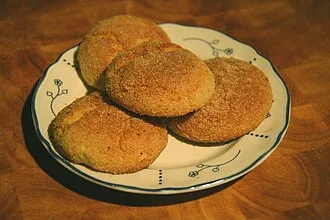
Harcha
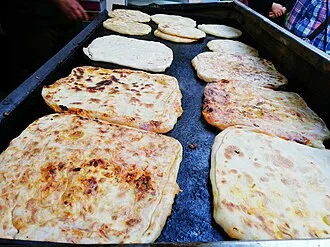
Harcha means little more than a rough, gritty texture in Moroccan Arabic, and the bread earns the name honestly: it is built almost entirely from coarse semolina rather than flour, giving it a sandy, cornbread-like crumb that sets it apart from Morocco's other griddle breads. Unlike msemen, the dough is not laminated or folded into thin layers; instead it is patted into a thick disc and cut into wedges before cooking, closer in spirit to a flatbread scone than to a stretched pastry. Home cooks griddle harcha slowly over low heat so the thick wedges cook through without burning the outside, producing a crisp, slightly crumbly crust around a tender center. It is a common breakfast and teatime bread across Morocco, usually split open while still warm and filled simply with butter and honey or apricot jam, and it travels well enough that it is often packed for school lunches and road trips.
Made almost entirely from semolina
Coarse semolina makes up most of the dough, giving harcha its sandy texture and slightly crunchy crust.
Rich with butter and oil
Melted butter and vegetable oil are worked into the dough, keeping every bite tender and giving it a buttery crumb.
Cut into wedges before cooking
The dough is patted into a thick disc and cut into triangular wedges rather than shaped into individual rounds.
Griddled low and slow, no yeast needed
Harcha relies on baking powder rather than yeast, so it cooks gently on a griddle until golden without ever needing to rise overnight.
Ingredients 4 servings
- 400g coarse semolina
- 2 tbsp fine semolina or flour, for extra binding
- 1 tbsp sugar
- 1 tsp baking powder
- 1/2 tsp salt
- 80g butter, melted
- 80ml vegetable oil
- 150ml warm milk, plus more as needed
- Extra coarse semolina, for shaping and coating
How to make it
- 1Combine the coarse semolina, sugar, baking powder and salt in a large bowl.
- 2Rub the melted butter and vegetable oil into the dry ingredients with your fingertips until the mixture feels sandy.
- 3Pour in the warm milk gradually, mixing until the dough comes together into a soft, slightly crumbly ball.
- 4Sprinkle a work surface generously with extra coarse semolina and pat the dough into a thick, even disc about two centimeters high.
- 5Cut the disc into six or eight wedges, coating each piece in a little more semolina.
- 6Heat a griddle or heavy skillet over low to medium heat and cook the wedges for several minutes per side, until deeply golden and cooked through in the center.
- 7Serve the harcha warm, split open and spread with butter and honey or jam.
Nutritional info
per serving (~350 g)
Estimated nutritional values.
Pairs perfectly with