Jiaozi
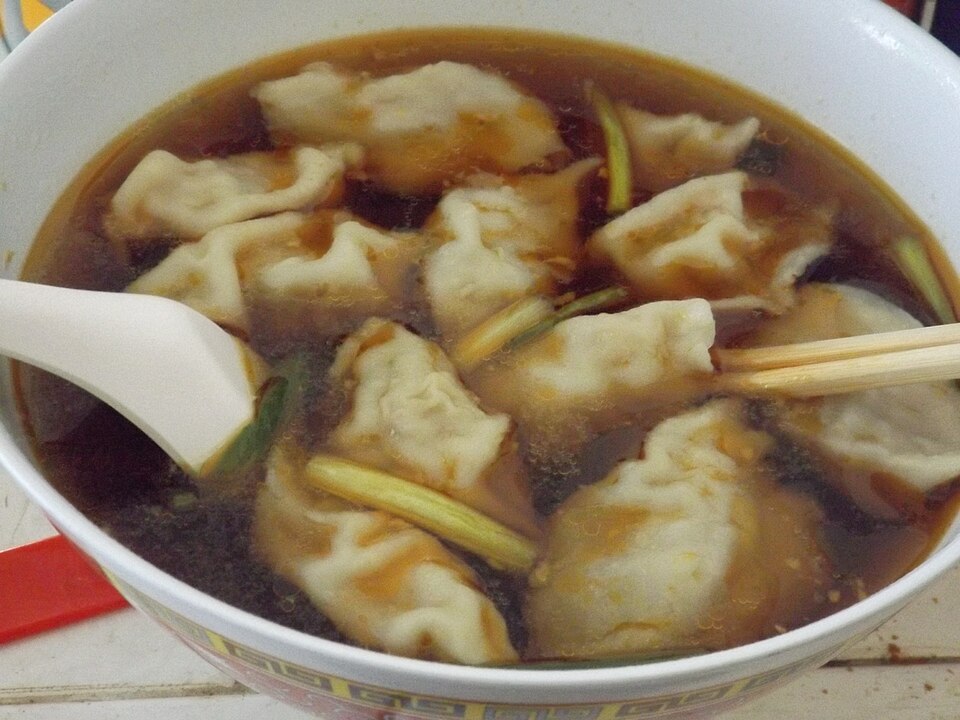
Jiaozi are among the oldest dishes in Chinese cooking, with a history stretching back over 1,800 years, traditionally associated with the Chinese New Year table — their curved shape recalls the silver ingots used as currency in ancient China, a symbol of prosperity for the coming year. Every region has its own filling preferences and cooking method, but the basic structure — thin dough, pleated filling inside — has stayed the same for centuries. What separates successful jiaozi from mediocre ones comes down to two factors: water squeezed well out of the cabbage, without which the filling releases too much moisture and softens the dough from the inside before it even gets to cook; and sealing the edges only by pressing, with no added water — water at the edge thins out during boiling and leaves an opening for the filling to escape. The choice between boiling and pan-frying isn't just a matter of taste: boiling gives a more delicate texture, while pan-frying (guo tie) adds a crisp contrast that's lost if the base stays too long in the steam.
Cabbage salted and drained beforehand
Removes water so the filling doesn't soak the wrapper
Edges pleated by hand
The pleats hold the shape and seal well during cooking
Fried on the base, steamed on top
Guo tie style — crisp bottom, soft top
Dipping sauce served separately at the table
Black vinegar, soy sauce and chili oil, mixed to taste
Ingredients 4 servings
- 500g minced pork
- 300g Chinese cabbage, finely chopped
- 2 tbsp salt (for the cabbage)
- 3 spring onions, chopped
- 1 tbsp grated ginger
- 2 tbsp soy sauce
- 1 tbsp sesame oil
- A pinch of white pepper
- 300g flour
- 180ml water
- Oil, for frying
How to make it
- 1SALT THE CABBAGE: mix the chopped cabbage with the salt and let sit for 15 minutes, then squeeze firmly by hand to remove as much water as possible.
- 2KNEAD THE DOUGH: combine the flour with the water gradually, knead for 8-10 minutes until smooth, cover and let rest for 30 minutes.
- 3PREPARE THE FILLING: mix the minced pork with the squeezed cabbage, spring onion, ginger, soy sauce, sesame oil and pepper, until well combined.
- 4ROLL AND CUT: divide the dough into a long roll, cut into equal pieces and roll each into a thin 8-9cm disc, slightly thicker in the centre.
- 5FILL AND PLEAT: place a teaspoon of filling in the centre, fold the disc in half and pleat the edges with your fingers, pressing firmly to seal without water.
- 6BOIL (classic version): bring a large pot of water to a boil, add the dumplings without crowding the pot and boil for 6-7 minutes, until they float to the surface and the meat is cooked through.
- 7OR PAN-FRY (guo tie): heat oil in a heavy-bottomed pan, stand the dumplings upright, brown the base for 2 minutes, then pour in a little water and cover, steam for 5-6 minutes, until the water evaporates and the base stays crisp.
- 8SERVE: mix black vinegar, soy sauce and chili oil separately in a small bowl for dipping, and serve the dumplings hot.
Nutritional info
per serving (~350 g)
Estimated nutritional values.
Pairs perfectly with