Karaage
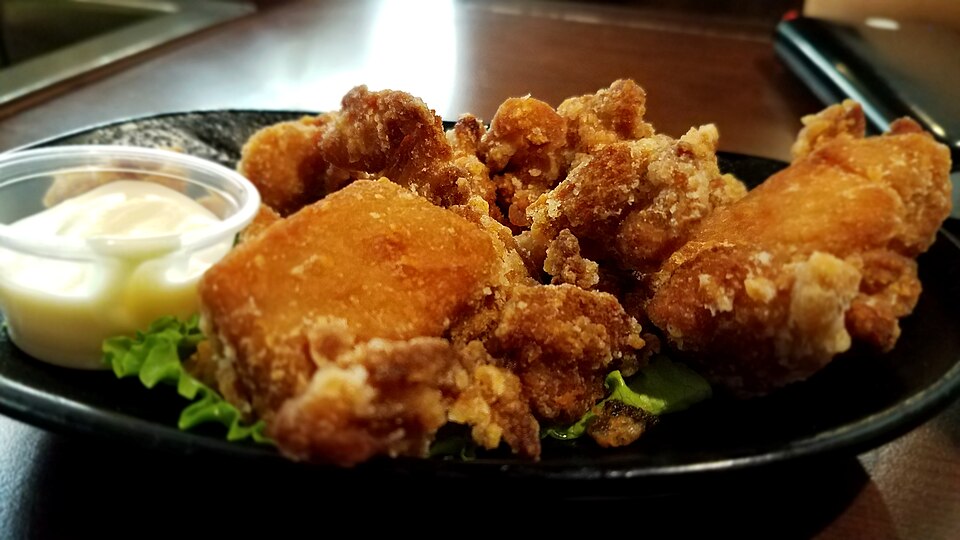
The term karaage refers to a general Japanese frying technique for small pieces of meat or vegetables in starch or a little flour, without the thick batter used for tempura; the chicken version, now essentially synonymous with the name, spread rapidly after World War II, when chicken became more affordable, and has remained a common home dish and a bento box staple ever since. What separates a successful karaage from an ordinary version comes down to a few technical details: the marinade has to soak deep into the meat, not just coat the surface, which is why the pieces sit for at least 30 minutes in the fridge; potato starch, finer and less absorbent than flour, forms a thin crust that doesn't thicken the texture; and frying in two stages — the first at moderate temperature to cook the inside, the second at higher temperature to crisp the crust — is what gives that crunchy-juicy contrast, impossible to get from a single pass through the oil.
Marinated in ginger, garlic and soy sauce
Soaks deep into the meat while the pieces sit in the fridge
Potato starch instead of flour
Forms a thinner, crispier crust that doesn't soak up oil
Double-fried, a few minutes apart
The first round cooks the meat through, the second crisps the crust
Skin-on chicken thigh pieces
Stay juicy inside, unlike the drier breast meat
Ingredients 4 servings
- 600g boneless chicken thighs, skin on, cut into 3-4cm pieces
- 2 tbsp soy sauce
- 1 tbsp sake or dry white wine
- 1 tbsp grated ginger
- 2 garlic cloves, grated
- 1 tsp sesame oil
- 100g potato starch (or cornstarch)
- Oil for frying
- Lemon wedges, to serve
How to make it
- 1MARINATE THE CHICKEN: mix the chicken pieces with the soy sauce, sake, grated ginger, grated garlic and sesame oil in a bowl, cover and refrigerate for at least 30 minutes, ideally 1-2 hours.
- 2DRAIN AND COAT: remove the pieces from the marinade, letting the excess liquid drip off, then dredge them in potato starch, pressing lightly so the coating sticks evenly.
- 3HEAT THE OIL: heat oil to 160-165°C in a deep pot or pan with enough oil to cover the pieces.
- 4FIRST FRY: fry the pieces 3-4 minutes, in batches so the pot isn't crowded, until lightly golden, then remove to a rack or paper towels.
- 5REST: let the pieces rest 3-5 minutes, during which residual heat continues cooking the inside.
- 6SECOND FRY: raise the oil temperature to 190°C and fry the pieces again for 1-2 minutes, until the crust turns deep golden brown and crisp.
- 7SERVE: drain well on paper towels and serve immediately, with lemon wedges on the side.
Nutritional info
per serving (~350 g)
Estimated nutritional values.
Pairs perfectly with