Nikujaga
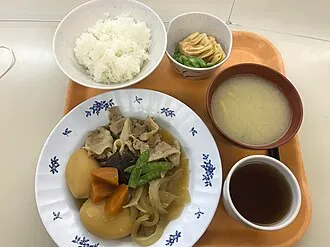
Nikujaga is a homestyle stew of thinly sliced meat, potatoes, onion, and carrot simmered together in a sweet soy broth, one of the most familiar dishes on the Japanese family dinner table. Its name simply joins niku, meaning meat, with jaga, short for jagaimo, or potato, describing the dish plainly rather than poetically. Unlike many simmered Japanese dishes built around fish or seafood, nikujaga leans on beef or pork, a choice that ties it to Japan's push toward Western-style ingredients in the late nineteenth century. Legend credits Admiral Togo Heihachiro with inspiring the dish, supposedly asking his cooks to recreate the beef stew he had eaten in Britain using ingredients available in Japan. Whatever its true origin, nikujaga became a staple of home cooking during the twentieth century, often cited in surveys as the dish new brides are most expected to master. Regional households differ over pork versus beef and over how sweet the broth should be, but the dish is always prized as ofukuro no aji, the taste of home cooking passed down through generations.
Meat and potato, simmered together
Thin slices of beef or pork simmer alongside potatoes, carrots, and onion in one pot until everything is tender.
A sweet-savory broth
Dashi, soy sauce, mirin, and sugar combine into a broth that turns faintly sweet as it reduces around the vegetables.
Shirataki for texture
Threads of konjac noodle are tucked among the vegetables, adding a light, chewy bite that soaks up the broth.
The taste of home
Nikujaga is often called ofukuro no aji, «mother's taste», the dish most associated with Japanese home cooking.
Ingredients 4 servings
- 500g thinly sliced beef (or pork), cut into bite-sized pieces
- 4 medium potatoes, cut into large chunks
- 1 large onion, sliced
- 2 carrots, cut into rough chunks
- 100g shirataki noodles (konjac noodles), drained
- 600ml dashi stock
- 4 tbsp soy sauce
- 3 tbsp mirin
- 2 tbsp sugar
How to make it
- 1Heat a splash of oil in a heavy pot and sear the sliced beef over medium-high heat until it just changes color.
- 2Add the onion and cook briefly until it turns translucent and takes on a little color from the meat.
- 3Stir in the potatoes and carrots, tossing everything together so the vegetables pick up the meaty flavor.
- 4Pour in the dashi, soy sauce, mirin, and sugar, then bring the pot to a gentle boil, skimming off any foam.
- 5Lower the heat and add the shirataki noodles, then cover the pot with a drop lid so the liquid simmers evenly over the ingredients.
- 6Simmer gently for about twenty minutes, until the potatoes turn tender and soak up the sweet-savory broth.
- 7Turn off the heat and let the stew rest for a few minutes so the flavors settle, then serve it warm in deep bowls.
Nutritional info
per serving (~400 ml)
Estimated nutritional values.
Pairs perfectly with