Pastel
Pastel arrived in Brazil with Japanese and Chinese immigrants who settled in São Paulo in the early 20th century, bringing fried dumpling techniques that Brazilian cooks reshaped into something distinctly their own. The dough thinned out, the filling shifted toward ground beef and local cheeses, and the shape stretched into the wide, blistered rectangle now recognized nationwide, sold from street carts and open-air markets rather than restaurant kitchens. Today pastel is a fixture of São Paulo's feiras livres, the open-air markets held on fixed weekdays in every neighborhood, where a stall selling pastel almost always sells caldo de cana beside it, pressed fresh from sugarcane stalks on the spot. The pairing is so standard that ordering one without the other draws a second glance, and the combination has become one of the clearest signatures of Brazilian street food culture.
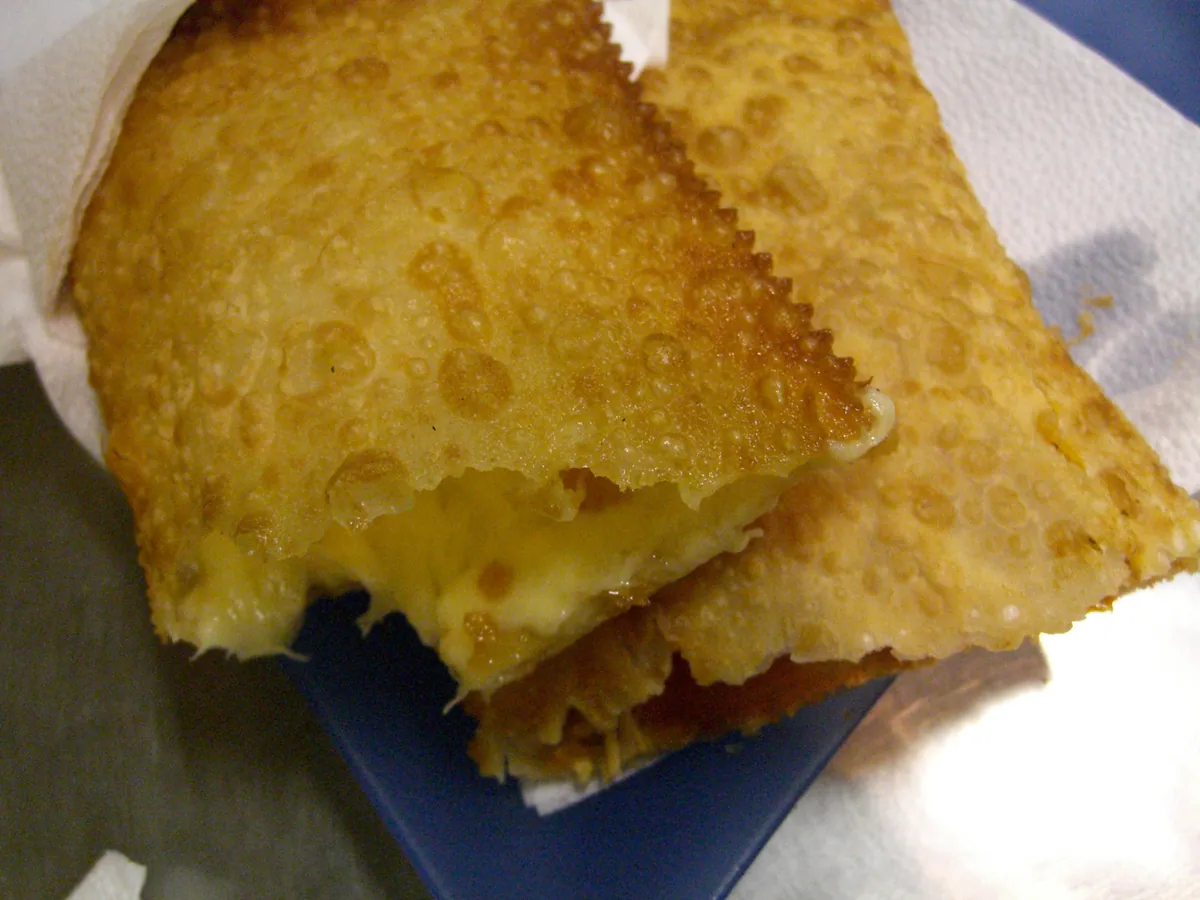
Paper-thin, blistered dough
A splash of cachaça or vodka keeps the gluten short, giving the shell its signature crisp, bubbly blister once fried.
One shape, endless fillings
Ground beef is the classic street-stall filling, but cheese, hearts of palm and shrimp fill the same folded pocket.
Fried hot, eaten hotter
Pastéis are deep-fried to order and handed over still sizzling — they are never meant to sit around.
The caldo de cana pairing
Street vendors sell pastel beside a cup of freshly pressed sugarcane juice, a combination locals treat as inseparable.
Ingredients 4 servings
- 500g all-purpose flour
- 1 tbsp cachaça or vodka
- 1 tbsp white vinegar
- 1 tsp salt
- 2 tbsp softened butter or lard
- 200ml warm water
- 300g ground beef, seasoned and cooked
- 1 onion, finely chopped and sautéed with the beef
- Neutral oil, for deep-frying
How to make it
- 1Combine the flour, salt, cachaça, vinegar and softened butter in a bowl, rubbing the fat in until the mixture looks sandy.
- 2Add the warm water gradually, kneading until you get a smooth, elastic dough that no longer sticks to your hands.
- 3Cover the dough and let it rest for at least 30 minutes so the gluten relaxes.
- 4Meanwhile, brown the ground beef with the chopped onion in a hot pan, seasoning with salt and pepper, then let the filling cool completely.
- 5Roll the rested dough out paper-thin on a floured surface and cut it into rectangles or circles.
- 6Spoon a portion of the cooled filling onto one half of each piece, fold the dough over and press the edges firmly to seal, crimping with a fork if needed.
- 7Fry the pastéis in oil heated to about 180°C for two to three minutes per side, until they puff up and turn deep golden, then drain on paper towels before serving hot.
Nutritional info
per serving (~350 g)
Estimated nutritional values.
Pairs perfectly with