Pulpo a la Gallega
Pulpo á feira, or "fairground-style octopus," takes its name from the village fairs and pilgrim festivals of inland Galicia, where octopus sellers known as pulpeiras boiled it in enormous copper cauldrons over open wood fires and served it straight onto wooden plates for the crowds. Landlocked towns such as O Carballiño, far from the Galician coast, became famous for the dish once salted, dried octopus could be carried inland and reconstituted by boiling, long before refrigeration made fresh seafood easy to transport.\n\nThe dish's simplicity is deliberate: nothing is meant to compete with the octopus itself beyond good olive oil, coarse salt, and smoked paprika from the Vera valley. Today it remains one of Galicia's most recognizable exports, served in tapas bars across Spain and beyond, but it is still judged by Galicians against the standard set by the pulpeiras at the village fairs where it began.
Frozen before boiling
A day in the freezer breaks down the octopus's muscle fibers, the classic home trick for tender flesh without a tenderizing mallet.
The three-dip trick
Dipping the octopus into boiling water three times before fully submerging keeps the skin from splitting as it cooks.
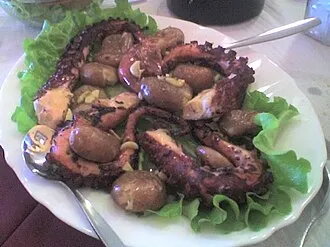
Served on a wooden plate
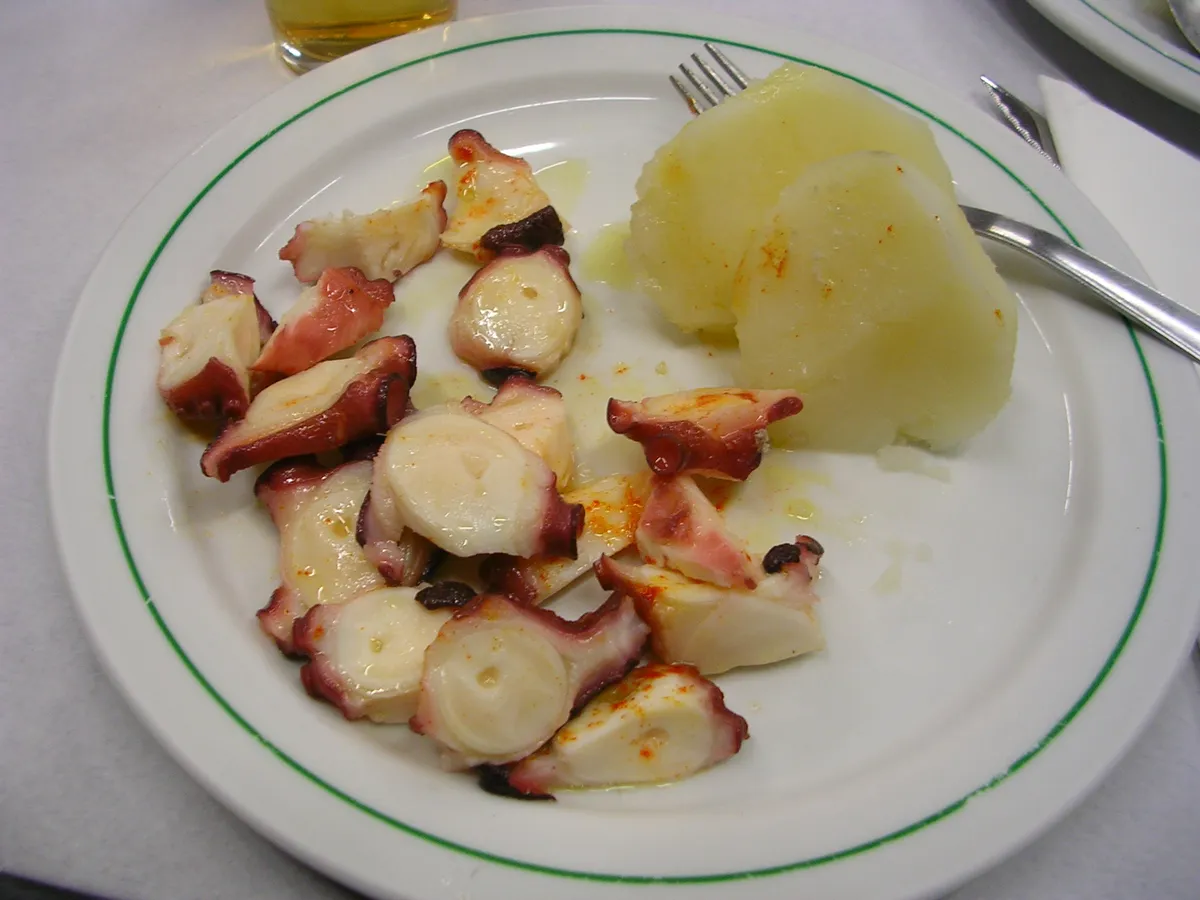
Pulpo á feira takes its name from the wooden dishes used at Galician village fairs, where it is still plated the same way today.
Sweet and hot pimentón
A dusting of smoked paprika, both sweet and spicy, over olive oil and coarse salt is the only seasoning the octopus needs.
Ingredients 4 servings
- 1.5 kg whole octopus, fresh or previously frozen
- 1 onion, unpeeled, halved (for the boiling pot)
- 2 bay leaves
- 4 medium potatoes, peeled
- 80 ml extra-virgin olive oil
- 2 tsp sweet smoked paprika (pimentón dulce)
- 1 tsp hot smoked paprika (pimentón picante)
- 2 tsp coarse sea salt
- Water, enough to submerge the octopus
How to make it
- 1If the octopus is fresh, freeze it for at least 24 hours, then thaw it, as freezing breaks down the muscle fibers so the flesh turns tender instead of rubbery.
- 2Bring a large pot of water to a rolling boil with the halved onion and bay leaves.
- 3Hold the octopus by the head and dip it into the boiling water three times, lifting it out each time, before letting it sink in fully — this old fisherman's trick keeps the skin from splitting.
- 4Simmer gently, uncovered, for 40 to 50 minutes, until a knife slides easily into the thickest part of a tentacle.
- 5Meanwhile, boil the potatoes in salted water until tender, then slice them into thick rounds.
- 6Let the octopus rest in its cooking water off the heat for about 10 minutes, then lift it out and snip the tentacles into thick coins with kitchen scissors.
- 7Arrange the potato slices on a wooden plate, top with the octopus, drizzle generously with olive oil, and dust with the sweet and hot pimentón and coarse salt just before serving.
Nutritional info
per serving (~350 g)
Estimated nutritional values.
Pairs perfectly with