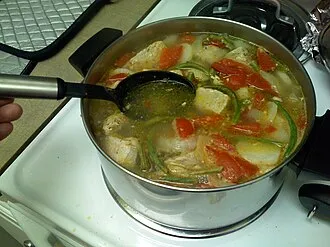
Sinigang
Sinigang is considered one of the defining soups of Philippine cuisine, with roots predating colonial influences, when tamarind and other sour fruits were used to acidify soups before lemon or vinegar became common. The name comes from the Filipino word 'sinigang', which literally means 'stewed' or 'boiled'. While pork is the most common, sinigang is also made with beef, shrimp, or fish, and the sour base can also come from other local fruits, not just tamarind. It remains one of the dishes Filipinos abroad crave the most, as a taste of home.
Sourness is the star
Tamarind gives the soup a refreshing tartness, quite different from the clear broths found elsewhere in Southeast Asia.
Pork is the most common choice
Slow-simmered pork ribs or belly become tender and give the broth a rich, meaty depth.
Fresh vegetables added in stages
Radish, string beans, and kangkong leaves go in one after another, so each stays just tender.
Always served with rice
Sinigang is almost always eaten alongside steamed rice, which tames the soup's tang.
Ingredients 4 servings
- 600g pork ribs, cut into pieces
- 1.5l water
- 1 onion, quartered
- 2 large tomatoes, quartered
- 50g concentrated tamarind paste
- 1 white radish (daikon), sliced
- 150g string beans, cut
- 1 bunch kangkong (water spinach) or spinach
- Fish sauce, to taste
How to make it
- 1Boil the pork ribs in water with the onion until tender, skimming off foam occasionally.
- 2Add the tomatoes and simmer until they soften and break down slightly.
- 3Stir the tamarind paste into the broth until it turns pleasantly sour.
- 4Add the radish and simmer until it starts to soften.
- 5Add the string beans and cook until tender but still crisp.
- 6Season with fish sauce, then add the kangkong leaves and let them wilt for just a couple of minutes.
- 7Serve hot, in bowls, alongside steamed rice.
Nutritional info
per serving (~400 ml)
Estimated nutritional values.
Pairs perfectly with