Tarte Tatin
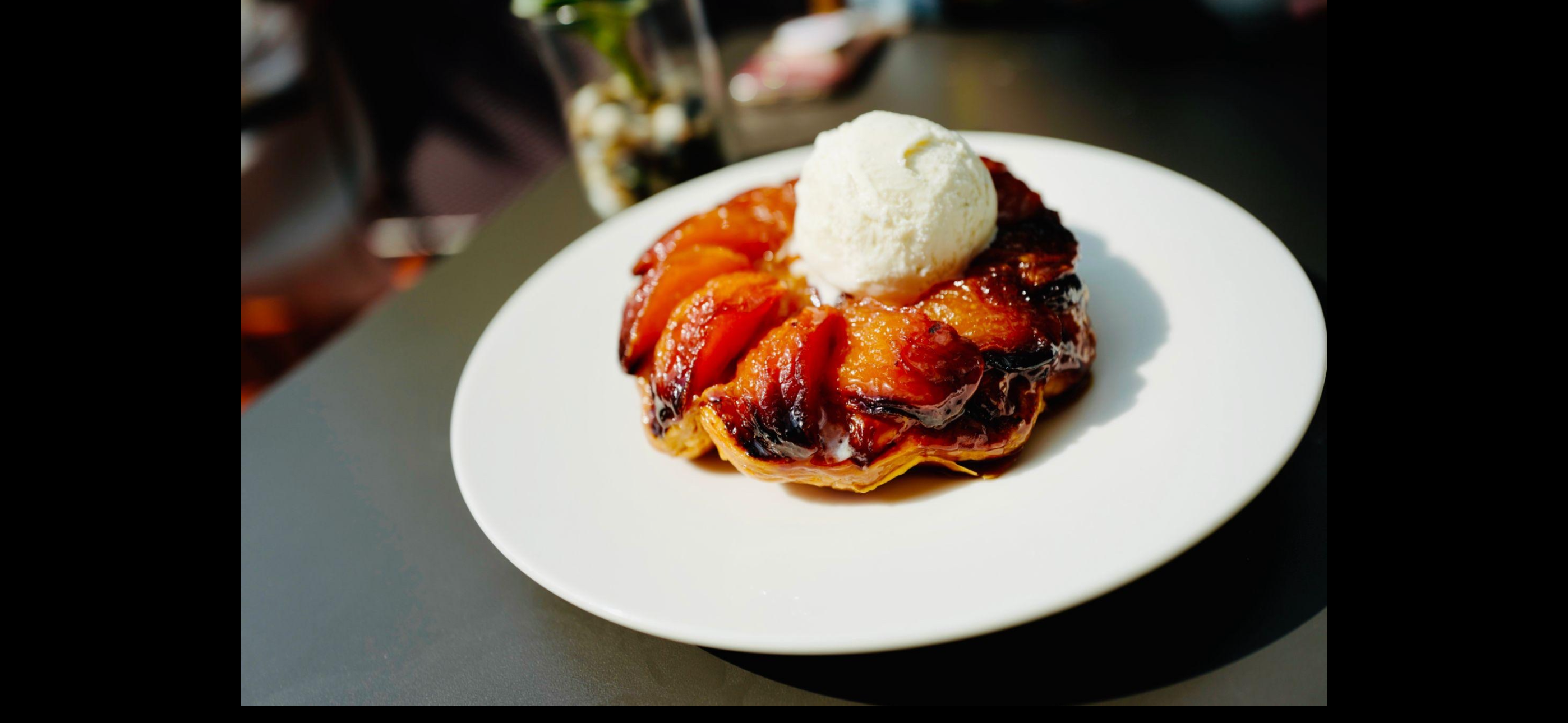
Tarte Tatin appeared at the Hôtel Tatin in Lamotte-Beuvron, in the Sologne, in the 1880s, and was codified in 1898. Sisters Stéphanie and Caroline Tatin ran the hotel; the legend — which Curnonsky made official — has Stéphanie leaving the apples too long in butter and sugar, throwing a disc of pastry over the top, and bunging the pan into the oven. Inverted onto a plate, the upside-down tart became the house signature and then a French classic. The honest version: firm slightly tart apples (reine de reinette is the original), plenty of unsalted butter, white sugar (never brown), puff or shortcrust pastry — no vanilla, no cinnamon. Those are anglo additions. The Sologne accompaniment is thick crème fraîche, not ice cream: the cool tang cuts the depth of the caramel.
Sologne, the 1880s
Born at the Hôtel Tatin, codified by Curnonsky in 1898
Firm apples, never soft
Reine de reinette is the original — golden delicious the modern stand-in
Caramel first
Sugar and butter to deep amber, then the apples cook in the caramel
One flip, no retake
Pastry on top in the oven, then inverted dramatically — with crème fraîche, not ice cream
Ingredients 8 servings
- 8–10 firm tart apples (reine de reinette, golden delicious or honeycrisp), peeled, halved and cored — about 1.5 kg
- 150 g unsalted butter, cut into cubes, at room temperature
- 200 g white granulated sugar (do not use brown sugar for a classic tatin)
- 1 tbsp fresh lemon juice
- 1 round of puff pastry (pâte feuilletée), ~250 g, rolled to 26 cm and 3 mm thick
- A pinch of fleur de sel
- To serve: 200 ml crème fraîche, not ice cream — the Sologne tradition
How to make it
- 1Toss the apples with the lemon juice so they don't brown, melt 50 g of the butter in a heavy 22–24 cm oven-safe pan with an ovenproof handle (or a proper tatin pan), scatter the sugar over it in an even layer and leave on medium heat without stirring until the sugar dissolves and caramelises to a deep amber — about 8–10 minutes — because pale caramel bleeds out in the oven and tastes flat.
- 2Take the pan off the heat and drop the remaining 100 g butter in cubes onto the caramel — it will hiss hard — swirl until the butter melts evenly into a glossy buttery sauce, then pack the apple halves cut-side-up, tight against each other in a spiral from the centre outwards (they will fit), return to medium heat and cook uncovered for 25–30 minutes, tilting the pan now and then to catch the caramel from the edges, until the underside of the apples has drunk the caramel and they just start to soften.
- 3Meanwhile heat the oven to 200°C and roll the puff pastry to a disc a little larger than the pan, cut the heat under the apples and let them settle a minute, then drape the pastry over the top and tuck the edges down inside the pan between the apples and the wall — the crust will grip the fruit when you flip — and prick the pastry a few times with a fork.
- 4Bake 25–30 minutes until the pastry is fully golden and the caramel bubbles around the edges, then rest exactly 10 minutes — long enough for the caramel to settle without setting hard.
- 5Place a serving plate wider than the pan over the pastry, hold the pan with a thick cloth and invert in one decisive motion — if any apple stays stuck to the pan, lift it back onto the tart with a spatula — scatter a pinch of fleur de sel over the top and serve warm with a generous spoonful of crème fraîche on each plate.
Nutritional info
per serving (~350 g)
Estimated nutritional values.
Pairs perfectly with