Crema Catalana
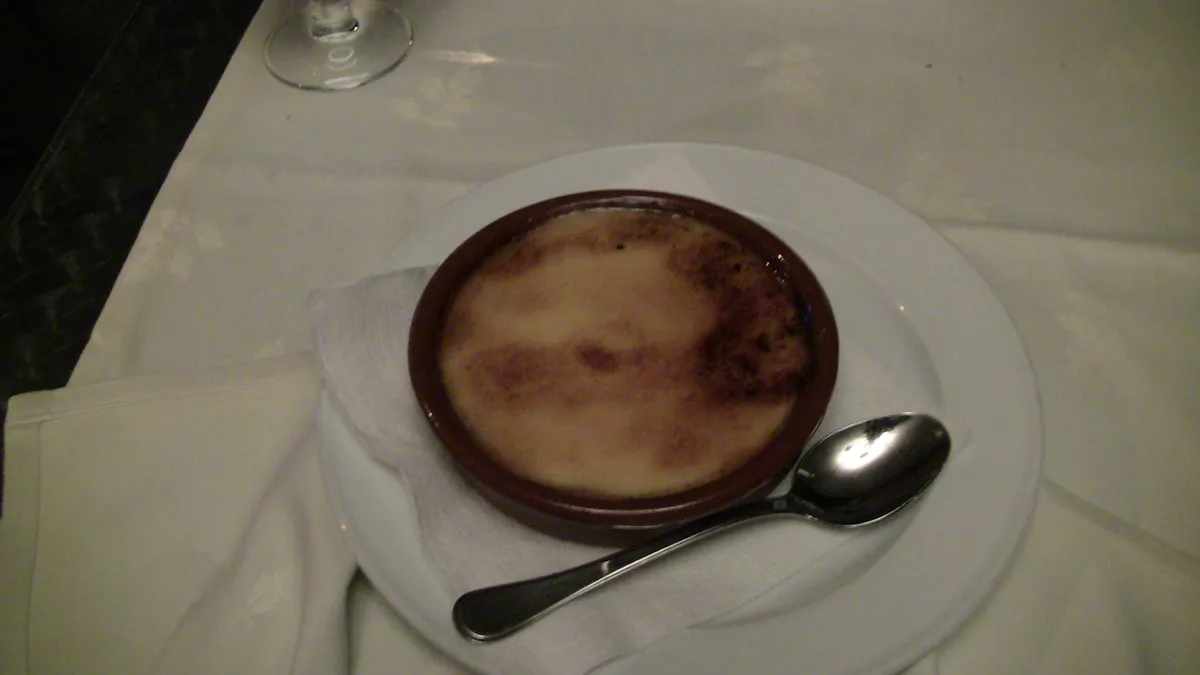
Crema catalana is considered one of the oldest custard-based desserts in Europe, with similar recipes recorded in Catalonia as far back as the 14th century, well before the French crème brûlée, which only appeared in the 17th century. Its alternative name, "crema de Sant Josep," comes from the tradition of serving it on Saint Joseph's Day, March 19th, which in Catalonia also marks Father's Day, an occasion for festive family meals.\n\nUnlike its European relatives, crema catalana is cooked on the stovetop rather than baked in a water bath in the oven, which makes it quicker to prepare, though it requires constant stirring to prevent curdling. The caramelized crust, traditionally made with a special iron called a "cremador," adds the essential crackling contrast, and a coal-heated iron cremador remains, for many old-school Catalan cooks, the only authentic way to make it, even though most modern kitchens today use a gas torch.
A custard of egg yolks, not cream
Unlike crème brûlée, its closest French cousin, crema catalana is made with milk rather than heavy cream, giving it a lighter texture.
Caramelized with a red-hot iron
Traditionally, the sugar crust is caramelized with a flat iron disc heated over coals, not a modern kitchen torch.
Infused with lemon zest and cinnamon
The milk is steeped with lemon zest and a cinnamon stick, giving it a distinctive citrusy, spiced aroma.
The traditional dessert for Saint Joseph's Day
Crema catalana is historically tied to the feast of Saint Joseph on March 19th, though today it's found year-round across Catalonia.
Ingredients 4 servings
- 500ml whole milk
- 4 egg yolks
- 100g sugar, plus 4 tbsp for caramelizing
- 25g cornstarch
- The zest of 1 lemon, in wide strips
- 1 cinnamon stick
- 1 tsp vanilla extract
- 4 ramekins or clay dishes, for serving
- A pinch of salt
How to make it
- 1Pour the milk into a saucepan, add the lemon zest and the cinnamon stick, then heat it gently over low heat until nearly boiling, without letting it actually boil.
- 2Remove the pan from the heat and let the milk steep with the aromatics for 15 minutes, then strain it, discarding the zest and cinnamon.
- 3Whisk the egg yolks with the sugar and cornstarch in a bowl until the mixture turns pale and smooth.
- 4Gradually pour the warm milk over the yolks, whisking constantly, so the eggs don't curdle.
- 5Return the mixture to the saucepan over low heat and stir continuously with a wooden spoon for 8 to 10 minutes, until it thickens enough to coat the back of the spoon.
- 6Pour the custard into four clay dishes and let it cool to room temperature, then refrigerate for at least 3 hours, ideally overnight.
- 7Just before serving, sprinkle a thin, even layer of sugar over each dish and caramelize it with a kitchen torch or a special heated iron, until a crisp, golden crust forms.
Nutritional info
per serving (~350 g)
Estimated nutritional values.
Pairs perfectly with