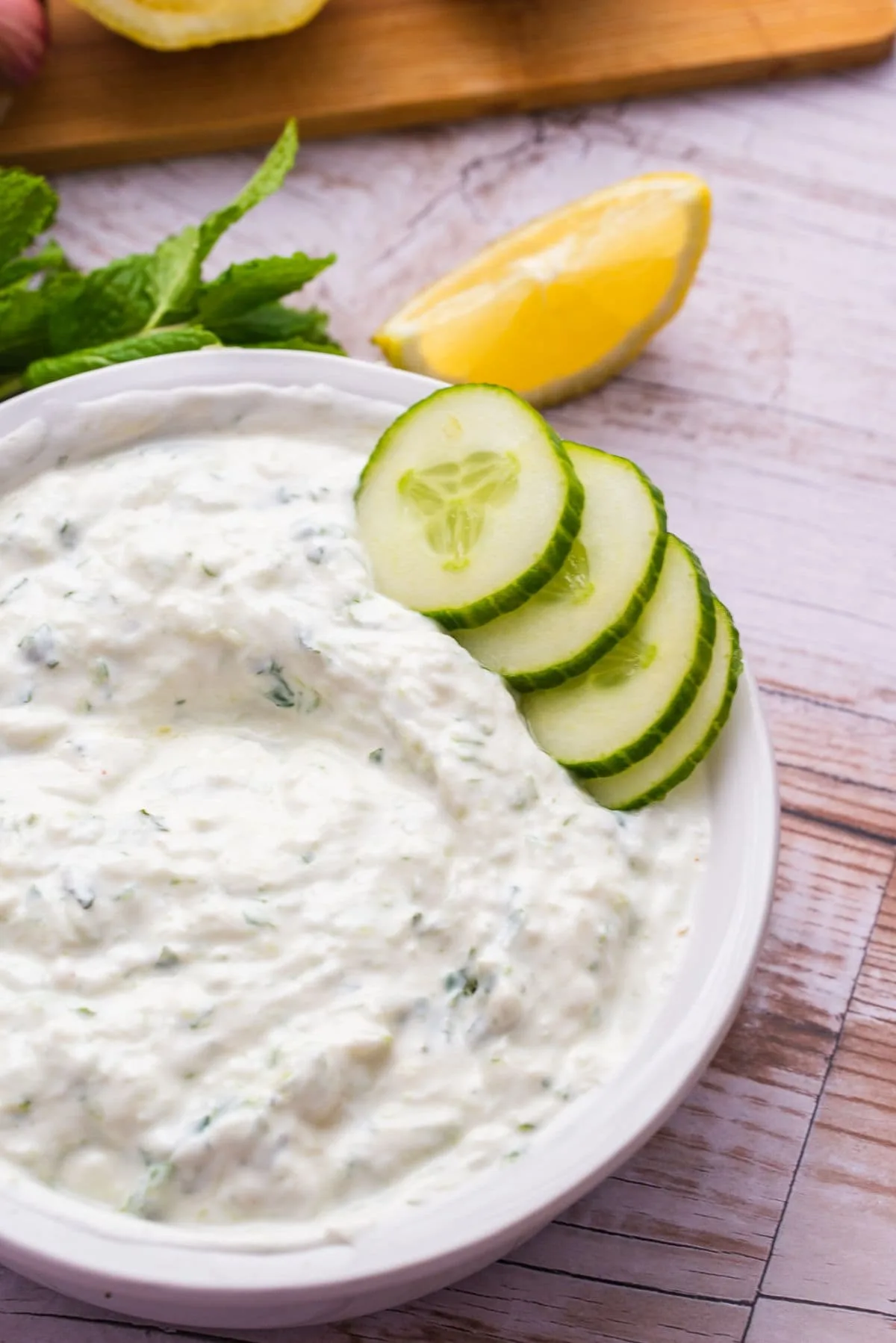
Tzatziki
Tzatziki belongs to a family of yogurt-cucumber condiments that run across the eastern Mediterranean and into Central Asia. The word itself traces through Turkish cacık to Persian origins, and Turkey's version — thinner, more liquid — is still a close relative. In Greece, tzatziki is thicker and more garlicky, served cold as a meze alongside grilled meats, pita, or vegetables. The most important step is removing moisture from the cucumber. Grated cucumber holds a surprising amount of water; if it goes into the yogurt unsqueezed, the dip separates and pools within minutes. Full-fat Greek yogurt — strained, dense — matters just as much. Garlic goes in raw, usually grated or crushed to a paste; its intensity is what distinguishes one household version from another.
Rich in vitamins
Fresh and healthy
Traditional recipe
Authentic taste
Ingredients 4 servings
- 500g full-fat Greek yogurt (strained overnight if possible)
- 1 large cucumber (about 300g), grated and well squeezed
- 2 garlic cloves, finely grated
- 2 tbsp extra-virgin olive oil, plus a drizzle to serve
- 1 tbsp fresh dill, finely chopped
- Juice of half a lemon
- Fine sea salt to taste
How to make it
- 1The most important step: grate the cucumber on the coarse side of a box grater and place in a clean tea towel or colander.
- 2Sprinkle with a little salt, leave 10 minutes, then squeeze out hard — the cucumber will shed almost half its weight in water.
- 3Excess moisture is what makes tzatziki watery and weak.
- 4Combine the yogurt with the well-squeezed cucumber, grated garlic, olive oil, lemon juice and dill.
- 5Taste and adjust salt.
- 6Cover and refrigerate at least 30 minutes before serving — the flavours deepen as it rests.
- 7Serve drizzled with olive oil and a few fresh dill sprigs, alongside warm pita bread or souvlaki.
Nutritional info
per serving (~350 g)
Estimated nutritional values.
Pairs perfectly with